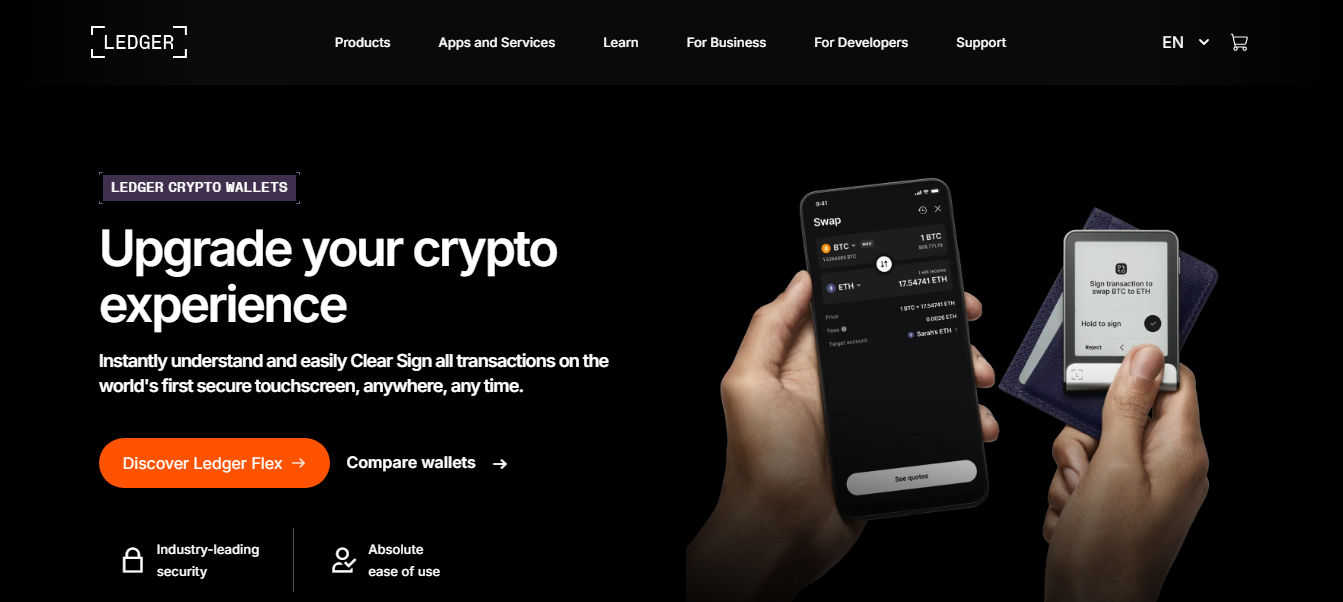
Cryptocurrency gives you financial freedom, but with freedom comes responsibility. Unlike banks, there’s no central authority to recover your crypto if private keys are lost or stolen. This makes security the most important aspect of crypto ownership.
Ledger.live is the official software platform designed for Ledger hardware wallets. It allows users to securely manage their crypto, track their portfolio, send and receive coins, stake assets, and update device firmware — all while keeping private keys offline and protected from hackers.
This guide explains what Ledger.live is, how it works, and how to use it safely.
Ledger.live is the official app for Ledger hardware wallets, available for desktop and mobile. It acts as a secure interface between your Ledger device and the blockchain while ensuring that private keys remain offline.
Key features of Ledger.live include:
Ledger.live ensures all sensitive operations are executed securely on the Ledger device.
Software wallets store private keys online, which makes them vulnerable to hacking, phishing, or malware. Ledger hardware wallets isolate private keys in a secure chip and require physical approval for all transactions.
Ledger.live complements this security by providing a user-friendly interface to manage assets safely.
Ledger.live works with all Ledger hardware wallets:
All Ledger devices can be safely initialized and managed via Ledger.live.
Ledger.live is designed around a zero-trust security model. Even if your computer or mobile device is compromised, your crypto remains safe.
This ensures comprehensive protection against online threats.
Follow these steps to safely set up your Ledger wallet.
Visit the official website: ledger.live. Avoid downloading from third-party sources.
Ledger Live is compatible with:
Install and launch the app on your device.
Connect your Ledger device via USB (or Bluetooth for Nano X). Click “Get Started” and select your device model.
Select “Set up as new device”. Your Ledger will generate cryptographic keys inside the secure chip. Keys never leave the device.
Your Ledger device will display a 24-word recovery phrase. This phrase is the only way to recover your wallet if it is lost, stolen, or damaged.
Security Tips:
Choose a secure PIN to protect your device from unauthorized access. Ledger devices use a randomized keypad to prevent keylogging.
Ledger Live allows you to install blockchain apps like Bitcoin, Ethereum, Solana, and more. Each app operates securely on your device.
Once apps are installed:
Your wallet is now ready.
Track all your assets and total portfolio value in real time.
Send and receive crypto with transactions confirmed physically on your Ledger device.
Trade supported cryptocurrencies through integrated, trusted partners.
Stake assets to earn passive income directly through Ledger Live.
View and manage NFTs on supported blockchain networks.
Keep your Ledger device secure with verified updates.
Your crypto remains on the blockchain. To regain access:
Without the recovery phrase, funds cannot be recovered.
FeatureLedger + Ledger.liveSoftware WalletKey StorageOfflineOnlineMalware ProtectionHighModerateTransaction ApprovalPhysical deviceSoftware confirmationLong-Term StorageExcellentLimitedRecovery Method24-word phrasePassword/email
Ledger.live combines high security with user-friendly management.
Create hidden wallets protected by custom passphrases.
Manually adjust transaction fees for faster confirmations.
Separate wallets for personal, business, and savings accounts.
Each app runs independently for added security.
Ledger Live works on:
Manage crypto securely from any device.
Ledger wallets remove the need for usernames, passwords, or email accounts. Security relies on:
This eliminates central points of failure.
Firmware updates improve:
Always verify your recovery phrase before updating firmware.
Ledger.live is perfect for:
It is ideal for anyone wanting secure control over cryptocurrency.
Ledger is trusted worldwide due to:
Ledger.live is the official interface that allows users to access these protections safely.
Ledger.live is the safest and most reliable platform for managing cryptocurrency with Ledger hardware wallets. By creating a secure recovery phrase, installing verified apps, and approving transactions on the device, users maintain full control over their assets.
In a crypto world with scams, hacks, and exchange failures, Ledger.live provides peace of mind through offline key storage, physical transaction verification, and enterprise-grade security.